Practice swimming hole ettiquette and safety
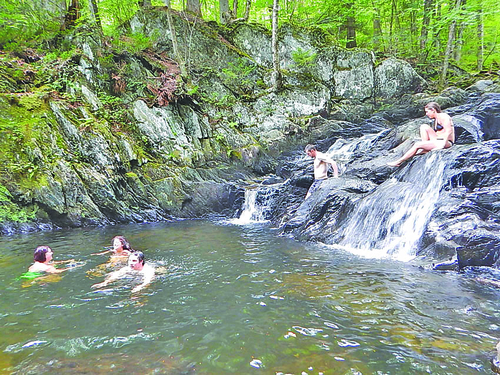
Swimming at the North Branch Cascades in Elmore. Photo courtesy of Vermont River Conservancy.
VERMONT - With swimming holes getting busier as summer arrives, more than a dozen non-profit organizations and state and federal agencies in the Vermont Swimming Hole Collaborative want to remind the public about important safety and etiquette considerations.
The Vermont Swimming Hole Collaborative organizations manage more than 25 swimming holes around the state. All saw an increase in visitors in 2020, with people flocking to rivers and waterways to cool off and enjoy the natural beauty and peace these special places have to offer. With the hot weather Vermont has seen recently, this spike continues. Challenges such as litter, unleashed dogs and pet waste, dangerous overflow parking on roads, and trespassing on private property are all issues that the swimming hole managers are working to tackle.
These issues risk continued public access to swimming hole sites, so the collaborative is asking the public to pitch in and help by observing eight guidelines.
One: Follow the rules of “carry in, carry out” and “leave no trace” when trash and recycling bins are not present or are full.
Two: Use designated bathroom facilities only, as both human and dog waste can lead to dangerous bacteria in the water.
Three: Always keep dogs leashed to keep them and others safe, or leave them at home. Pick up and properly dispose of dog waste.
Four: When a parking lot is full, come back later or visit a different site. Do not park on private property or in the travel area of roads.
Five: Do not trespass on private property and respect “no trespassing” signs.
Six: Read and respect all signage.
Seven: Be considerate of others and the neighborhood.
Eight: Help keep Vermont waters clear. Staying on the trails reduces erosion and saves plants.
The Vermont Swimming Hole Collaborative includes Friends of the Mad River, Vermont Department of Forests, Parks & Recreation, Mad River Path, Mad River Valley Planning District, Richmond Land Trust, USDA Forest Service, Green Mountain National Forest, Vermont Housing & Conservation Board, Vermont River Conservancy, and White River Partnership. These groups are working together to ensure Vermont’s swimming holes are enjoyed respectfully and protected for years to come.